Engineering PCs
Custom Engineering PCs Built for CAD, Simulation, MATLAB, SolidWorks, ANSYS, and Technical Computing.
An engineering PC should be fast, stable, accurate, and ready for real project workloads. It should handle design, simulation, calculations, coding, rendering, data analysis, and long processing sessions without slowing down your workflow.
At M Machine Build, we build engineering workstations in Mumbai for mechanical engineers, civil engineers, electrical engineers, electronics engineers, robotics teams, researchers, students, consultants, and industrial design professionals.
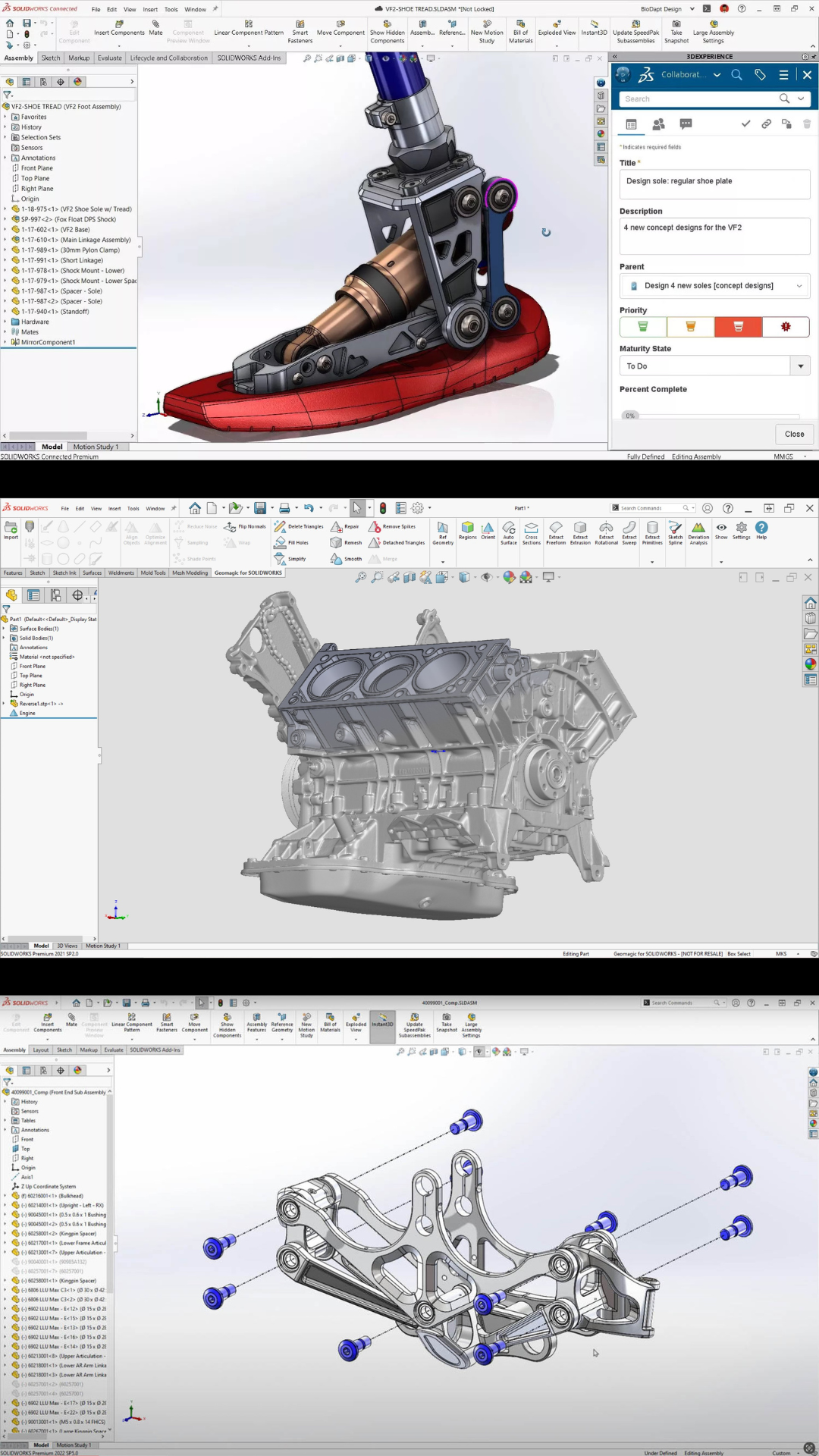
Engineering workloads are demanding because they often combine multiple types of computing. One project may include CAD modeling, simulation, spreadsheet calculations, Python scripts, MATLAB analysis, PCB design, 3D visualization, documentation, and rendering. A normal desktop may work for basic tasks, but serious engineering work needs a balanced workstation.
Whether you use SolidWorks, ANSYS, MATLAB, Simulink, Autodesk Inventor, Fusion, AutoCAD, CATIA, Siemens NX, Creo, Altium Designer, KiCad, Python, LabVIEW, or custom engineering software, your PC should be planned around the applications you use every day.
 Engineering Software
 Custom Workstation PC
 Electronics & Robotics
Why Engineering Workstations Need Careful Planning
Engineering software can stress different parts of the computer depending on the task. CAD modeling often needs strong single-core CPU performance and a reliable GPU. Simulation and analysis can benefit from more CPU cores, large RAM capacity, and fast storage. Rendering and visualization tools may require powerful graphics cards with enough VRAM. Coding and data analysis workflows need responsiveness, memory, and storage speed.
A prebuilt desktop may advertise a good processor or graphics card, but it may still compromise on cooling, motherboard quality, RAM expansion, SSD speed, power supply reliability, or workstation stability. In engineering work, these compromises can lead to slow assemblies, failed simulations, thermal throttling, long solve times, viewport lag, and crashes during important deadlines.
A custom engineering PC is built around actual work: the software you use, model size, simulation complexity, dataset size, render needs, budget, and future upgrade path.
Engineering PCs Built Around Your Software
Every engineering discipline has different hardware needs. A mechanical design workstation is different from a simulation workstation. A MATLAB and Python data analysis PC is different from a SolidWorks assembly workstation. A robotics development system is different from an electronics design PC.
SolidWorks and Inventor workflows benefit from strong CPU responsiveness, enough RAM, certified or stable graphics, fast SSD storage, and a clean Windows environment. ANSYS, CFD, FEA, and simulation workflows may need more CPU cores, more RAM, and faster storage for solver files. MATLAB and Simulink workflows can benefit from CPU performance, memory, SSD speed, and GPU acceleration when using supported toolboxes. Electronics and robotics workflows need stable multitasking, reliable USB/connectivity, coding performance, and sometimes GPU acceleration for computer vision or AI.
- SolidWorks workstations
- ANSYS simulation PCs
- MATLAB and Simulink PCs
- Autodesk Inventor workstations
- Mechanical engineering PCs
- Electronics engineering PCs
- Robotics development workstations
- CFD and FEA workstations
Important Components in an Engineering PC
A professional engineering workstation should be selected as a complete system. Processor speed, core count, graphics card, RAM capacity, storage layout, cooling, power supply, and upgrade path all matter.
Processor for CAD, Simulation, and Calculations
The CPU affects CAD responsiveness, rebuild times, solver speed, scripting, calculations, compiling, and multitasking. Many CAD tasks prefer strong single-core performance, while simulation and technical computing can benefit from more cores. We choose the CPU based on your software and workload.
Graphics Card for Viewport and GPU Compute
The GPU affects 3D viewport performance, visualization, rendering, GPU-accelerated simulation, machine vision, and AI-assisted engineering workflows. Some users need a stable professional GPU, while others benefit from high-performance RTX graphics with more VRAM.
RAM for Assemblies, Solvers, and Data
Engineering files can become large. Assemblies, simulation meshes, MATLAB datasets, analysis results, PCB projects, and multiple applications can consume memory quickly. 32GB can work for lighter engineering use, 64GB is a strong professional starting point, and 128GB or more is useful for large simulations and heavy multitasking.
NVMe SSD Storage
Fast storage improves software launch time, project loading, assembly opening, solver scratch performance, simulation result handling, and general responsiveness. Engineering workstations can use separate drives for OS, active projects, datasets, simulation output, and archive storage.
Cooling and Thermal Stability
Long solves, renders, and analysis runs can keep the CPU and GPU under load for hours. Good cooling, airflow, fan curves, SSD cooling, and clean cable routing help the workstation maintain consistent performance.
Power Supply and Expansion
A reliable PSU supports workstation stability and future upgrades. Engineering users may later add more RAM, storage, GPUs, PCIe cards, networking cards, capture devices, or external equipment, so platform planning matters.
Engineering Workstations by Use Case
Instead of recommending one fixed configuration to every engineer, we build systems according to the actual technical workload.
Mechanical Engineering PC
Mechanical engineering PCs are built for CAD modeling, assemblies, drawings, product design, finite element analysis, rendering, and documentation. These systems need strong CPU performance, reliable graphics, enough RAM, and fast storage for smooth design work.
Simulation and Analysis Workstation
Simulation workstations are planned for FEA, CFD, thermal analysis, structural analysis, meshing, solver workloads, and result visualization. Depending on the solver, these systems may need high core count CPUs, large RAM capacity, fast NVMe storage, and stable cooling.
MATLAB and Data Analysis PC
MATLAB, Simulink, Python, NumPy, SciPy, Jupyter, and engineering data workflows benefit from a responsive processor, enough RAM, fast SSD storage, and GPU support when using compatible acceleration tools. These PCs are useful for research, controls, signal processing, robotics, and numerical computing.
Electronics Engineering PC
Electronics engineers using Altium Designer, KiCad, LTspice, Proteus, embedded tools, firmware IDEs, and circuit simulation software need a stable workstation for schematic design, PCB layout, simulation, compiling, documentation, and hardware testing.
Robotics and Embedded Development Workstation
Robotics teams often work with ROS, Python, C++, simulation tools, computer vision, sensor data, embedded development, and AI models. These systems need strong multitasking, GPU acceleration when required, reliable connectivity, and fast storage.
Industrial Design and Product Development PC
Product development workflows combine CAD, rendering, simulation, 3D printing preparation, technical documentation, and presentation visuals. These systems should balance CPU, GPU, RAM, and storage for design and communication work.
Latest Hardware Direction for Engineering PCs
As of 2026, modern engineering workstations should be planned around current multi-core processors, strong single-core performance, DDR5 memory, fast NVMe SSDs, reliable GPUs, and stable Windows 11 support. Many engineering applications still benefit heavily from fast CPU responsiveness, while simulation, rendering, visualization, and AI-assisted workflows can use more CPU cores, GPU acceleration, and larger memory capacity.
For many engineering users, the best choice is a balanced workstation rather than the most expensive hardware. A SolidWorks assembly PC may need different hardware than an ANSYS solver workstation. A MATLAB workstation may need strong CPU, RAM, and SSD performance, while GPU acceleration depends on the toolboxes and algorithms being used. A robotics or computer vision workstation may benefit from a stronger NVIDIA GPU and more VRAM.
- Modern Intel and AMD workstation platforms
- DDR5 memory for current-generation builds
- NVMe SSDs for fast project and solver storage
- RTX GPUs for visualization and GPU compute
- High RAM capacity for simulations
- Reliable cooling for long workloads
- Windows 11 professional workstation setup
- Upgrade path for future engineering projects
Our Engineering PC Building Process
At M Machine Build, every engineering PC starts with understanding the workload. We do not recommend the same PC to every engineer because software, file size, simulation type, and project complexity matter.
Workflow Consultation
We discuss your engineering software, project size, simulation needs, model complexity, RAM requirement, storage requirement, monitor setup, budget, and future upgrade plans.
Hardware Selection
We select the CPU, GPU, RAM, motherboard, NVMe SSD, cabinet, cooling, power supply, and storage layout based on your real engineering workflow.
Professional Assembly
The workstation is assembled with clean cable routing, proper cooler mounting, GPU support, airflow planning, component inspection, and static-safe handling.
BIOS and Driver Setup
We configure memory profiles, firmware updates, fan curves, boot settings, chipset drivers, GPU drivers, storage settings, and essential utilities for stable performance.
Stress Testing and Validation
We test CPU load, GPU load, memory stability, SSD performance, thermals, and system stability so the workstation is ready for serious engineering work.
Ready for Production
The final system is prepared for CAD, simulation, coding, documentation, analysis, rendering, and daily professional use.
Need an Engineering PC for Your Exact Software?
Share your software list, project size, simulation workload, budget, storage needs, and upgrade plan. M Machine Build can help you choose a workstation that makes sense for real engineering work.
Start Your Engineering PC ConsultationSEO Focus: Engineering PC Builder in Mumbai
If you are searching for an engineering PC builder in Mumbai, SolidWorks workstation, ANSYS simulation PC, MATLAB workstation, mechanical engineering PC, robotics development workstation, CFD workstation, FEA workstation, electronics engineering PC, or custom workstation for engineering software, the most important thing is to choose hardware around your actual workload.
M Machine Build focuses on performance, stability, cooling, storage planning, software compatibility, and future upgrade value. Whether you need a budget engineering desktop, a professional CAD workstation, a simulation-focused PC, or a high-end engineering workstation, the configuration should be planned carefully before buying parts.
Frequently Asked Questions
What is the best PC for engineering software?
The best engineering PC depends on your software. CAD, simulation, MATLAB, electronics design, and robotics workflows all use hardware differently, so the configuration should be planned around your actual workload.
How much RAM do I need for engineering work?
For light CAD and student engineering work, 32GB can be enough. For professional CAD, simulation, MATLAB, and multitasking, 64GB is a strong starting point. Heavy FEA, CFD, and large datasets may benefit from 128GB or more.
Do engineering PCs need a powerful GPU?
It depends on the software. CAD viewports, rendering, visualization, GPU compute, robotics vision, and AI workflows can benefit from a powerful GPU. Basic calculations and 2D work may need less GPU power.
Is SSD important for engineering workstations?
Yes. NVMe SSD storage improves software loading, project opening, assembly handling, solver file performance, simulation result storage, and overall responsiveness.
Can one PC handle SolidWorks, ANSYS, MATLAB, and coding?
Yes. A properly planned engineering workstation can handle SolidWorks, ANSYS, MATLAB, Python, coding tools, documentation, and multitasking. The key is balancing CPU, RAM, GPU, storage, cooling, and power supply.
Do you build PCs for engineering students and professionals?
Yes. M Machine Build can plan engineering PCs for students, freelancers, professional engineers, research users, design studios, manufacturing teams, and technical businesses.